 |
| Crested Butte Bicycle Company Sign |
Bob worked with Wes Williams and Wes was absolutely essential to the development of the twenty-nine inch mountain bike.
In 2007 Dirt Rag published a factually inaccurate article entitled "The Big Wheel Mountain Bike Story".
Bob Poor wrote letter to the editor that remained unpublished until it fell into my hands.
This is Bob's unpublished letter to the editor.
All notes, spelling and grammar are Bob's except for one asterisk I added for clarification.
Well you sure stirred up a hornets nest with the Don article. I am sorry to say that I just got ahold of the article here only recently to actually read it but I had heard from others involved about it right away via phone. I have been in AK all summer and DR is not on the stands up here anywhere, you had better get your circ man on it? I bought the first issue of MBA here in Ketchikan in 1986 so I know the town has some history with mtn bike mags....I ended up accessing it online off your site which is a very cool feature eh?
Anyway I feel bad having to have to raise such a stink about this but I am not much of a fence sitter and quite frankly the article is slanted crap. I know you said Don spent alot of time on it and that the editor did too but it is all too obvious in many places that they didn't do the right research. This isn't about my being in Wes's camp and hating Don Cook, it is about having been there and seen this all first hand and if I didn't know something about it I asked Wes of course but also Mark Slate as he is a friend too. I am going to paste in the article and include my thoughts. Delete right now if you want but this is the real deal. I have not contracted Alzheimers yet and have a pretty darn good recollection of these events.
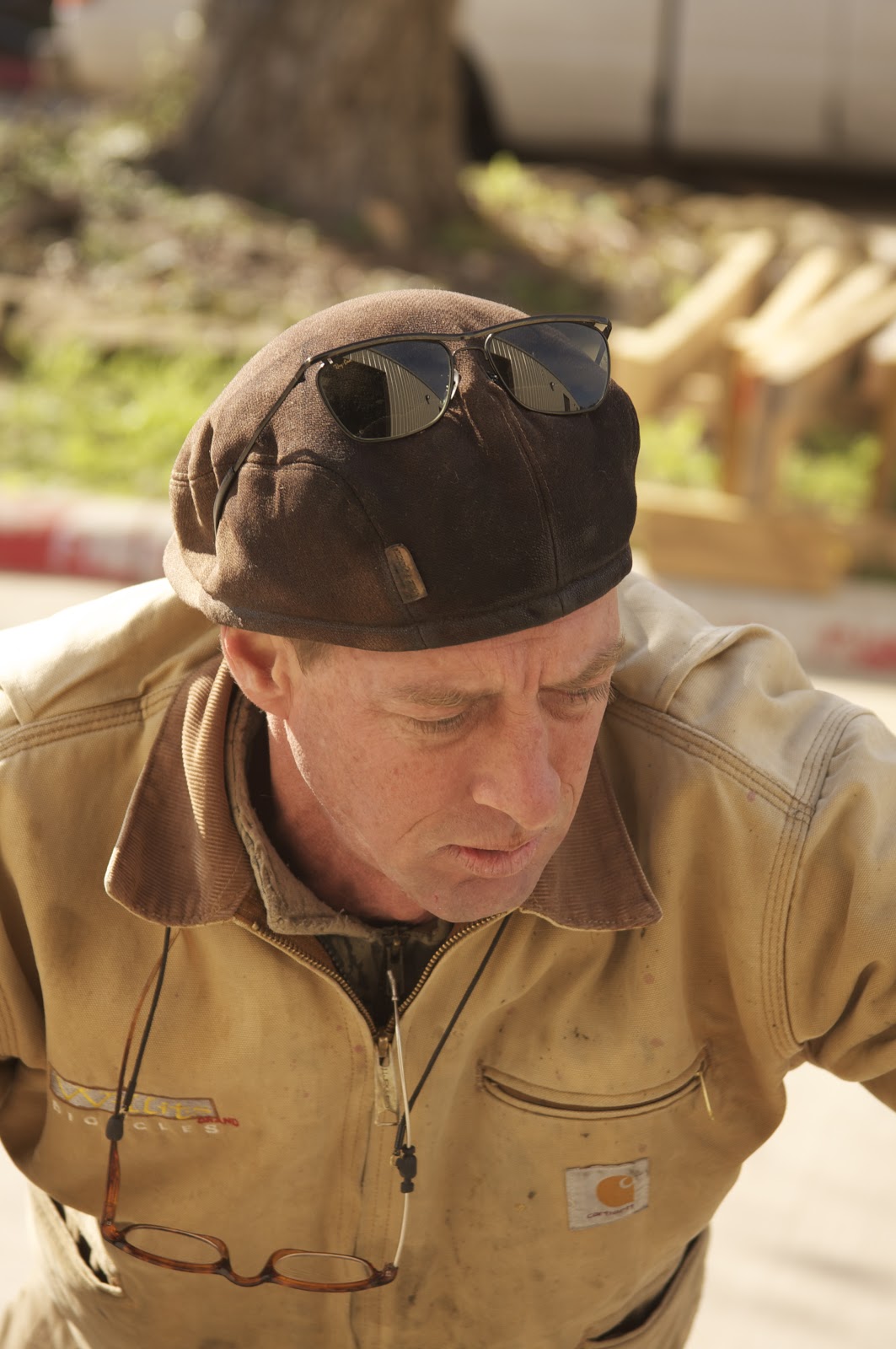 |
| Wes Williams |
Actually the first article about 29"ers was in MBA in the October 99' issue. It was a split article with a brief review of the Orange Mountie that Wes had sent to them and another speil that to his credit was written I believe by Don? MB also had a review of the same bike at this time, both mags were available at Interbike that year.
I have been overwhelmed with phone calls and emails from riders wondering about this and that for the new big wheel mountain bike (29er) they are building. This is very encouraging. As we all know the more people getting turned on and involved, the more products we will all be able to get our hands on. This is also a real indicator to me that the big wheel mountain bike has finally reached critical mass and is being thought about seriously as the next purchase for many who have been questioning it for the last 7 or 8 years. I thought this might be a good time to document a little of the history behind the big wheel and, even better, some of the thinking and story behind "why" the big wheel even happened. After all, mountain bikes have been around since the early '80s and the father to them, the klunker, has been around since the early to mid '70s. So what's up with the introduction of big wheels and why now? This informative story should help.
There are many who use the term "29er" to describe the type of bike I'm writing about. It's an abstract term used to account for the difference from a standard mountain bike, which generally uses 26" wheels. Many who are unfamiliar with these big wheels actually think that it is a new rim size that is being used and this should be cleared up from the start. Big wheels or 29ers are made with 700c size rims, which are used and have been for over 60 years on road bikes. The usage of the term 29er comes from the first production bike available to the masses from the Fisher bike company, called the Two Niner, which came out in 2001. It is in reference to the perceived wheel size, but it is much like using the term "Kleenex" instead of tissue˜it works and people know what you're talking about, but it is a commercial term for just one company. As you will read in this story, Gary Fisher (Hall of Fame Inductee, 1988) deserves such credit but there are many other people involved in this movement that also deserve the same recognition.
Well the math here is a bit off because later Don talks about the use of 700c in the latter part of the 19th century but only recognises the last 60 years here. The whole 29er thing was more about the Fisher marketing team than Gary. Ask him sometime. The fact that 29er is a designated class of sailboats really makes this laughable to me and has been a bone of contention since I first saw it. I was hoarding domain names back then and when I did 29er.com to my surprise a bunch of sailboats came up. Up unitl Gary and Treks marketing team came up with that designation in 01' we all referred to them as 29"ers. Of course this was a nod to the 28"er designation but that was not just Wes's thing, it was and is to this day a world recognized term. But I was there when we laid a tape on the first "tire" in Wes's shop and we both looked at each other and said "Now it's 29"er BABY!"
Some readers may be wondering how mountain bikes ever got started with 26" wheels if the bigger wheels are supposedly so much better. In the early to mid '70s in a handful of isolated locations, mainly Cupertino, Marin and Crested Butte, young bike enthusiasts began riding their bikes in the dirt. In Marin they were trucking their one speeds up Mt. Tamalpais for a downhill thrill, while in Cupertino the Mahon clan were adding gears and powerful brakes so as to ride up the singletrack hiking trails in comfort and then come smoking down with confidence. In Crested Butte commuting through pothole-laden dirt streets was what demanded the big tough tires. So why didn't they use road bikes and wheels? It's simple˜the tire. At that time in history there were no 700c tires available in a pneumatic (air filled) form that were big enough for really rough rocky riding. The only tires that were big enough for the rough riding of dirt came out of the late 1940s and early '50s off of bikes made by Schwinn and other companies. These bikes had smaller rims (559mm) than the more popular 700c road bikes but had much larger tires. There was a good reason for that, too. These bikes were being built by Schwinn and others for 10- to 16-year-olds to use, jumping curbs, riding through empty lots full of gopher holes and weeds; in general a maintenance free machine for an age group not yet nimble enough for the finer points of the fancy road bike. You see, after WWII ended and the economy swung full tilt back into the hands of the general public, your average 16-year-old wasn't saving up his/her allowance for a new bike. Oh no, they were after those beautiful fast machines coming out of Detroit: cars, cars, cars. Bike sales were hitting the cellar and the Schwinn Company, who had shut down bicycle production during the war to make other war needed parts, was suffering. Frank Schwinn knew he needed to go after a different market with his bikes and so began building bikes designed for kids from 10 to 16 years old. Frank reduced the wheel size from the standard of the time, 28", down to 26" to lower every aspect of the bike to fit the younger, shorter consumers he was marketing to. He even sloped the top tubes by bending them down in an arc to accommodate the shorter customers. At the time, cars, with all their fancy chrome and sexy curves, were what every young and old adult wanted. So Frank mimicked the auto industry and put gas tanks, lights, horns and racks on his machines and gave them the look. The bikes sold and sold well.
Boring stuff that leads you nowhere. Doesn't even mention Goodyears invention of the pneumatic balloon tire in 1936.
Well now it's the '70s, pavement reaches out to every part of the west and the road bike has taken over for the affluent traveler or recreationist. Those nifty fifties bikes are stuck out back behind the garage and can be found at every yard sale and junkyard in town. They're shorter and stronger than the road bikes and oh, by the way, they have this huge 2.125" pneumatic tire on them, usually a Schwinn, Carlisle or Uniroyal brand. So easy to find and so affordable, they were being snatched up by these hippie thrill seekers who were looking for something new to do.
Is the article about the history of the 700c wheel or the 26" one, I'm confused.
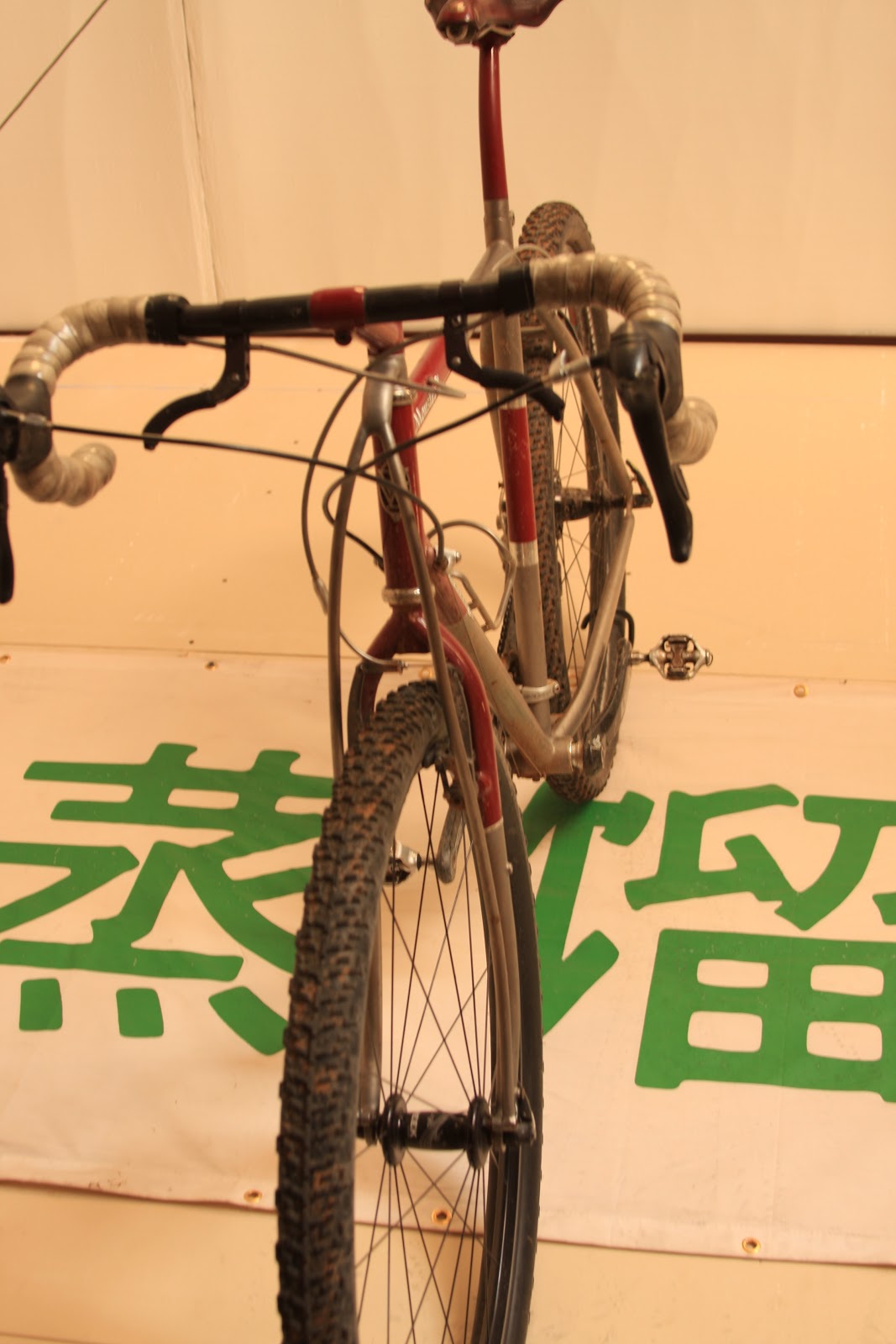 |
| Wes' Early 29"er |
Jesus, havent' I read this before somewhere?
In 1979 BMX rims began being made in 26" and more importantly, aluminum. Tires from several companies were showing up on the scene with gorgeous knobs and light skin sidewalls. Basically there was no looking back from that point. By 1985 so much was going on in that format for mass production mountain bikes nobody even noticed or questioned the rim or wheel size. Remember, the size of the tire is what truly gave the rider the ability to ride at speed over very demanding terrain. Suspension was several years away from entering the picture, so the carcass or casing size was the suspension and the amount of air inside was what balanced rider size vs. speed vs. flats.
Don refers to the size of the tire here. But the result of the size is extra VOLUME, air volume and that is the key here. The early Smokes had no volume, or actually if you do the calcs for a Torus you will find that a 700c tire is about the same volume of air as the next size up in 26". So this brings in to bear casing dimensions but then more volume is part of making the casing larger. Plain and simple. When will comparable to popular 26" tire casing sizes be available? As soon as they make the machinery that will do the job because the current machines are maxed out on something like the Exi Wolf.
Interestingly enough, without 25 years of development for the 26" mountain bike rim, the 700c road rim would never have been strong or light enough to even contemplate making a big wheel mountain bike in say, 1976. It was through the mountain bike market that almost all development of materials and products happened in the industry from the early '80s to the present. Everything to do with headsets, cranks, shifting, frame materials, bars, stems, brakes, wheels˜including spokes and yes, tires˜came out of the mountain bike industry.
Bullshit. You could mount a 29" tire to any old Mavic etc. from the day and ride around just fine on it. I have MA3's on my Townie that have been on there since Wes converted it for my in 2000 and they have been around for a long time. The extra volume of air afforded insulates the rim effectively enough so that a good rider picking smart lines can go a long time on a touring rim. I remember only one tire rolloff up in Hartmans. I never even had a flat running 29"ers for about 5 years.
This modern day movement using bigger wheels is of course just like every other facet of bicycle history. It is a "recycle" from years past. The pneumatic tire is nothing new. It dates back to 1887 when Dr. John B. Dunlop invented the first pneumatic device from a garden hose and installed it on his own son's bike. The superior air suspension this provided over solid tires led to worldwide acceptance by 1891. Tire sizes for many years before and after the turn of the century were commonly 30" x 1.5" and for young adults, women and vertically challenged men, the smaller 28" x 1.5". I can hear a few of you asking, "Why so big?" The answer: no pavement yet. Yes, the bigger sized wheel was used to smooth out the dirt roads that were full of potholes and rock or stone. Does any of this sound familiar? As pavement developed across the world and more surfacing took place, the wheel size began to shrink and tire size also was reduced to decrease rolling resistance. Bicycles were not the only example of a large wheel diameter size incorporated to glide more smoothly over dirt. Take a look at any make of auto from any country in the formative years of that industry˜they all had massive wood-spoked wheels in the 30" to 35" range to accomplish the same thing. Of course I'm just sticking to info from the rubber-clad days. We could go back even further in time and, say, take a look at that chariot thing that Ben Hur was riding around on in the coliseum, which had a rough and rocky surface. It had huge 40" to 50" wooden wheels. Or better yet bring it up to more recent times with how the "west was won" using wagons and buggies. Now there are some big ass wheels that were used to roll over raw land as efficiently as possible. The average size of the rear wheel on a covered wagon was six and one half feet. You get my point by now, so let's talk mountain bikes again.
Jesus, that is so freaking boring I can hardly stand it. Wagons Ho!
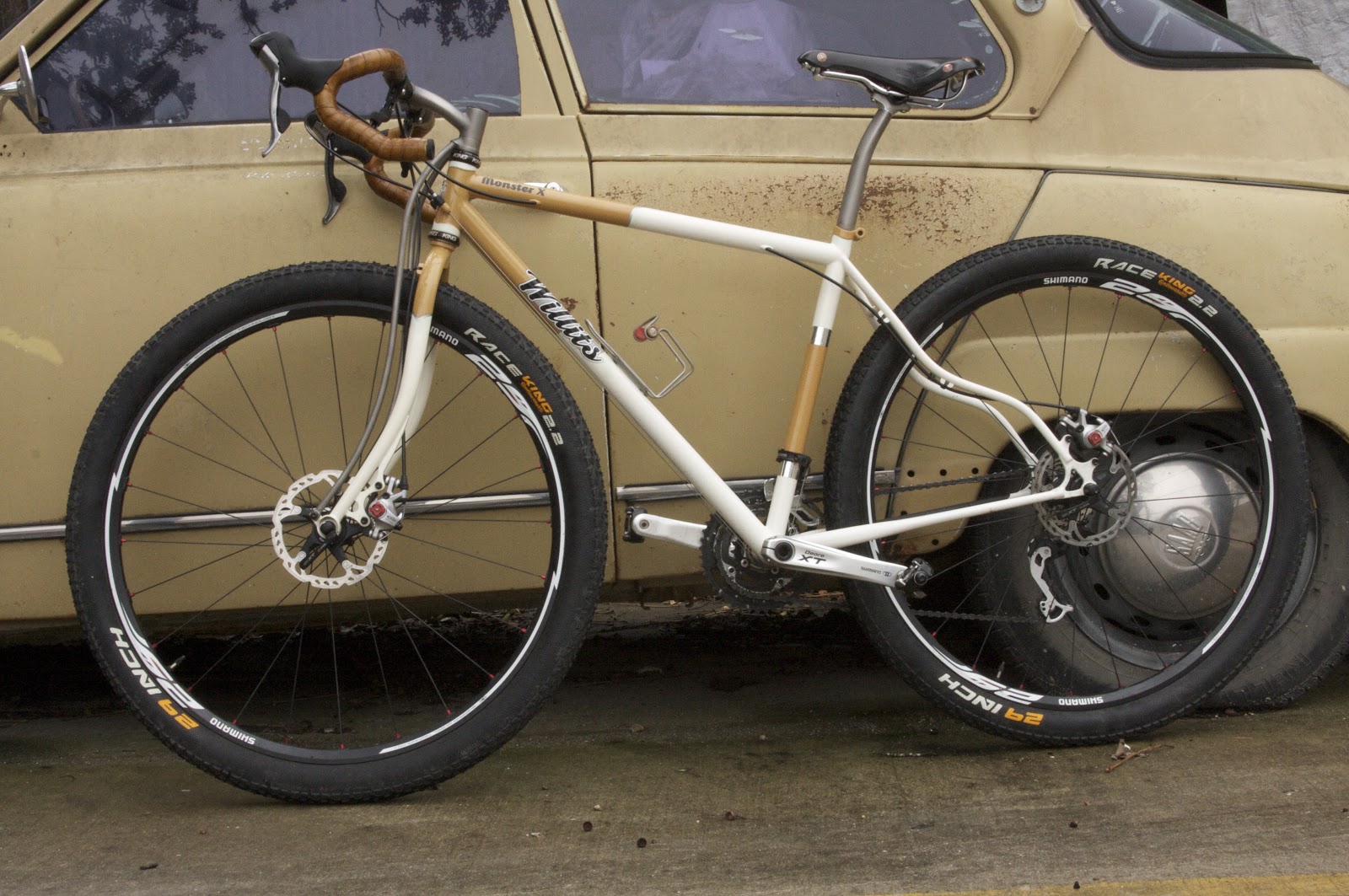 |
| Later Willits Bike |
If that is what Don says and Charlie backs him up then fair enough.
As mountain biking began to take off in the early '80s and things started happening fast with new products and materials, the standard Cunningham Indian he made is what was in demand and so the 700c "dirt racer" went back to what it started as, Charlie's commuter. I was very involved with product development of all kinds at the time, studying under and testing for Tom Ritchey (HOF Inductee, 1988), Steve Potts (HOF Inductee, 1989), and Scot Nicol (HOF Inductee, 1990), while still doing stuff for Charlie and working with Shimano to introduce their new Deore mountain bike gruppo. Oh those days were fun, working with Keizo Shimano (HOF Inductee, 2000) and his engineers, what a time. I didn't forget about the "dirt racer" but with all the cool stuff to play with on my standard bike there was no time to think about anything else. Although I never did have enough money to have Charlie build one of his dirt racers for me, I was not the only one who felt this kind of bike needed more attention. Suntour began sponsoring Charlie's race team in '84 and two of the team members, Steve Cook (HOF Inductee, 1988) and Tracy Smith, who were also from Crested Butte, talked Charlie into making them each one for what they called "training purposes." Those lucky shits, I'd love to have them write about their experiences from back then.
Lucky shits is right, neither one has spoken more than a few words to Don in over 20 years. Steve and Tracy were the real deal and that is why Charlie sponsored them at the time, not Don.
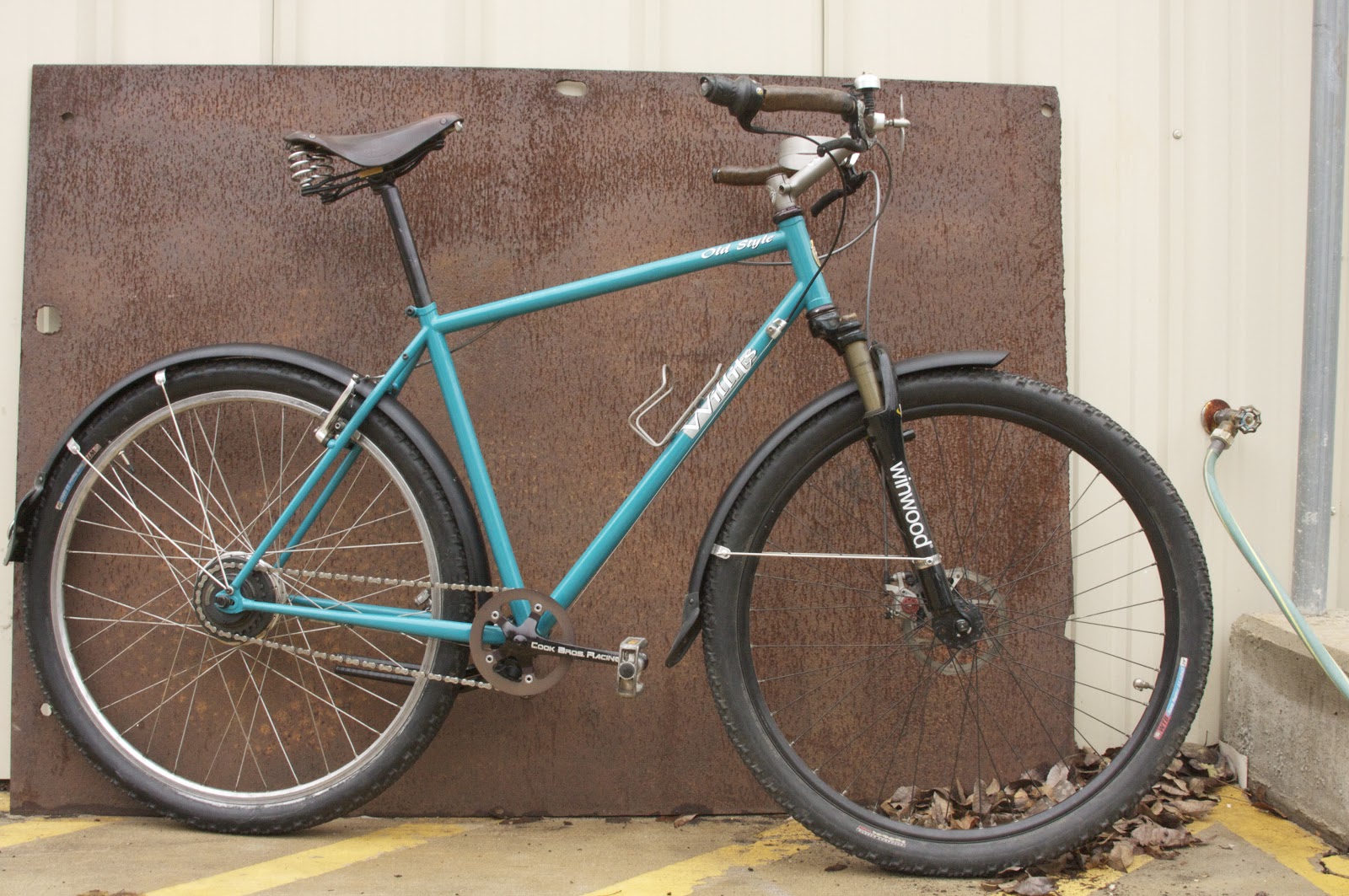 |
| Willits Old Style |
But this type of activity had been going on in Europe since the turn of the century where the bike has remained popular because their love affair with the automobile is less involved. Lucky bastards.
Again though, the problem wasn't frame strength or riding position that killed the Allegro, it was the size of tire that ultimately limited the potential for general use.
Just the Allegro eh?
Another attempt made flight just a couple years later. This time it was from a major manufacturer, Bianchi. In 1989 the product manager at Bianchi was Bill Horner, who is much better known for Felt Bicycles than this, but he began working on a bike labeled "Project 7" that year. It had 700c wheels, flat bars, thumb shifters, mountain bike brake levers and brakes (cantilevers) and a triple crank. Bill really believed in his work and pushed this Project 7 into production by 1990 under the name "Volpe." I have no idea what brand tires were spec'd on it, all I remember is the flat bars and mountain bike componentry. Bill left Bianchi that same year but the bike remained in the lineup. Sky Yeager took over the helm at Bianchi (she was Product Manager for 16 years and is one of the most respected authorities in the cycling business) and followed up what Bill started with Project 5, 3 and 1. She said at the time it was a concept that she kept "ramming into the system where it was not wanted," so by '95 it was dropped from Bianchi's line. Sky believed it would be very useful for adventure racing but did not see it as a mountain bike replacement.
That era was more an about the Hybrid scene for use on road and mild dirt, a concept that is still found in bike lineups to this day along with the ever popular Trekking bikes in EUR. DB came close with their Overdrive and Overdrive Comp bikes but didn't have the vision to get to the next level via a larger volume tire to match existing 26" casing sizes. I know someone who worked on this project back then and have his bike. It fit the "tire" front and rear although I did end up hitting the cs's and ss's with das crimper one day at Wes's. Give Weinsey a call and ask him what he actually thinks of the bike he was supplied? It soured him on 700c use offroad to this day. He sold the frame to DaveMo for like $20 years ago and he rode it all over until it broke a few years ago. It was the comp model and they had the OX tubing but didn't have the clearances in the rear triangle that the Overdrive did so it wouldn't fit the "tire" without mods. Gary Sprung has one and he can tell you about it? Say hey to him for me if you do. Wes built his first 28"er in 1988 at Ibis btw a bike that he has to this day and has ridden pretty much nothing else but 700c since.
While the Volpe may not have been a big seller it was an inspiration of sorts to several who were aware of it. In 1991 Panaracer introduced a tire for mountain bikes called "Smoke" and it sold so well (over a million units) that they followed it up with a rear specific tire called "Dart." Story has it that Dave Agiki, of Dan and Dave at Onza, drew the basics of the Smoke on a napkin while conversing over breakfast. This drawing was given to the director of R&D at Panaracer, Massa Odani. Mr. Odani, who by the way is still the R&D guy and in '06 brought big wheelers the popular Rampage tire, engineered and produced the Smoke, in 2-D I might add, and because of its success he up-sized it into a 700c x 45mm version and showed it at the Interbike tradeshow in Anaheim, fall of 1991. Not many even noticed it, but it caught my eye because the Smoke was very popular at the time, but I wondered how in the world I could use it. This is when things got interesting, because the tire had a 45mm casing and was equipped with sharp stiff block knobs that stuck outside the casing for aggressive cornering. Problem was it didn't fit in any 700c production bikes at the time. Well, one thing inspired the tire and now the tire inspired a new bike. In 1992 the Diamond Back Company had a production manager working for them by the name of Harry Larry, who like Diamond Back, had come from the BMX side of cycling. That year Harry introduced and delivered the "Overdrive" bike, a steel mountain bike style frame and fork fitted with 700c wheels and Panaracer Smoke tires front and back. Ooh-la-la! This bike was heavy and long but it fit these huge knobby tires. (According to Jeff Zell at Panaracer the tire was made for Diamond Back as an O.E.M. product just for the Overdrive.) First time I saw one was at the local Diamond Back dealer in Gunnison. Dave Wiens (HOF Inductee, 2000) was "the man" racing for Diamond Back at the time and was training locally on the Overdrive, even raced one at the then-popular Cactus Cup. He thought they would be very useful for uphill time trials.
The freaking Dart was a front specific tire and the Smoke was the rear not the other way around dude. Once again the lack of volume killed this effort plain and simple. I have ridden them and still have a set but they are skates. I am not kidding, ask Weins about this era of his life. All this name dropping is making me seasick btw.
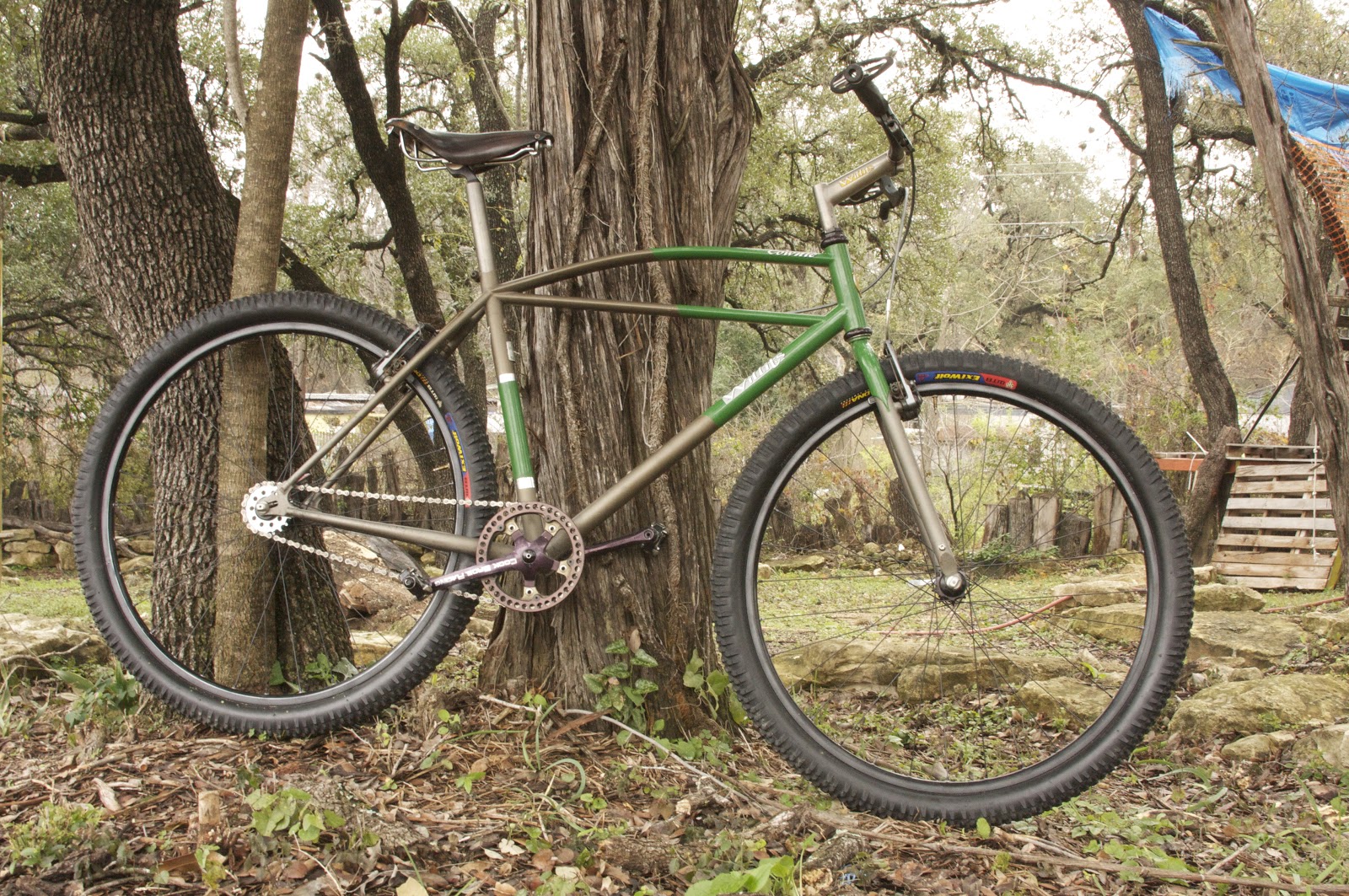 |
| Speaking About Single Speeds |
Don McClung and Mike could ride circles around the average rider on a Huffy and stop every five minutes to smoke up to boot.
That was the second week of July and within a few days I was down at the Tune Up ordering a Diamond Back Overdrive frame. I had spent the last 12 years dabbling with a 700c dirt bike and now there was an opportunity to test the waters again thanks to the Smoke tire. I wanted the Overdrive because it was 700c front and rear, but it was noticeably heavy and came with a straight bladed steel fork. Shake your hands right off the end of the bars, it would. Jacob Heilbron (HOF Inductee, 2002) of Canadian mountain bike lore and owner of Kona Bikes had produced a Joe Murray (HOF Inductee, 1988) designed cyclocross bike and had outfitted it with a 700c version of his popular and affordable Project II mountain fork. It was a copy of the much more expensive and unavailable Type II fork made by Charlie Cunningham, the same Type II that was outfitted on Charlie's 1980 "dirt racer." Jake the Snake sent me one for the Overdrive and I put the rest together˜flat bars, the brand new Shimano under-the-bar thumb shifters (push-push style like what SRAM is offering today) and other assorted light parts of those days. I had many different experiences on this bike that summer, but the one that haunted me the most was repeated 58 times and ultimately led to the selling of my rig that winter. It was hasty but 58 flats in one summer was too much. I still regret it, but I needed the money. Slapping mosquitoes while fixing a flat is tolerable a couple times a season, but 58 times put me over the edge and that bike was gone. The tires just weren't big enough. I was enchanted you might say by what I had experienced in the four months I rode it, enough to believe that if a mountain bike size tire casing came along I'd be right back at it, testing the theory. But this size casing was not to materialize for some time and the industry was very busy with suspension, mostly in the fork arena.
Love Don's use of "I" in this article. Wes and others did more than dabble all those years they rode 700c offroad.
Now in the spring of '94, I visited all my cycling friends around the Bay Area. One of the most predominate names in the business was my close friend Scot Nicol, owner and design genius of Ibis Cycles. His factory was in Sebastopol just north of Marin. I was staying with him for a couple days, riding at Annadel Park and catching up on industry info, when he told me Salsa Cycles was just down the street. I always admired Ross Schafer (HOF Inductee, 1991) and since he hadn't been to Crested Butte for a few years, I thought I'd go see him in his element. The shop was open but his employee said he was gone to get a bite to eat. So I stepped out front and noticed that right next door was Bruce Gordon's shop. Bruce was in and showed me his set-up, a beautiful shop, well organized and cleaner than a nun's mouth. He was working on custom racks that he made to go along with his custom touring bikes. A couple hours went by quickly as he told me his story and some of his theories, one of which really grabbed me. He was very disappointed with all the people who were out on the roads touring on mountain bikes. He was a touring connoisseur and didn't understand why a rider would use a mountain bike with a much smaller wheel circumference over the tried and true 700c touring wheel. After all, with its size it could roll much easier and faster across the country. He did understand the durability of the mountain bike tire and its volume advantage, but knew that once the touring world was introduced to his new bike and new tire they would all come around. "What's this, a new tire?" I queried. He quickly pulled one out and handed it to me. It was a beauty eh, very similar to the 650b tire that Tom Ritchey used to use from Europe called Hakkapelitta. Now it was all coming to me and I mean in a flash. The words Bruce used that triggered it all were, "I couldn't find a tire that was adequate in size and tread for touring on dirt roads, so I had one made." "So I had one made," well, HELLO! Ding Dong˜one of my closest friends was one of the tire designers at WTB, Charlie Cunningham. I'll get him to make me a tire in the size casing needed to make a big wheel mountain bike, duh. I stuck around for another hour or so just listening to Bruce's logic and ideas. It didn't stop at the tire either. He took me into the frame shop again and showed me a bike he had just designed and had built two of. It was called a "Rock N' Road" and it turned out that the fella who welded them was Wes Williams. Wes had been working for Scot Nicol for the last nine years at Ibis, where he learned fabrication, welding skills, design and frame building knowledge. He was obviously an artist as this Rock N' Road was just beautiful. Turns out that Bruce and Wes did the same thing as Mike Rust and Don McClung had done a couple years before. They built their own fork crowns and stanchions on RockShox Mag 21 forks to be used with the 700c wheels and Bruce's new 38mm tire. I thanked Bruce for his time and went back to say "Hi" to Ross Schafer before heading out.
What a freaking name dropper. But for sure BG was the man and Wes is the first to say so as he was a major inspriation to him along with Ron Andrews and Gary Helfrich. You know that Don's close personal friend Scot and he are like oil and water too?
Bruce certainly expanded my thinking and gave me some ideas. I was jazzed and immediately drove south to Charlie's. Charlie is always ready to sit and talk bike stuff so I ran my request by him, probably so fast he didn't catch on to what I was asking for but he still remembers the long-winded sales pitch. WTB was consuming every moment Charlie had in the early '90s and it was a struggle just to make the prototype stuff he needed to get into the O.E.M. world. He explained the procedure of tire fabrication and was unsure if a tire that big could be made. Molding questions! My vacation was running out and I needed to get back to Crested Butte. I wrote a couple letters to Charlie (before email) that summer and finally in the fall at the Interbike tradeshow we talked again. He was too busy with other projects and now Mark Slate (HOF Inductee, 1992) was given sole tire design duty, so maybe I could ask him about it. Mark is very knowledgeable about tires and construction and did listen, but he too was very busy and didn't really understand what I was asking for.
What a load of crap. Refer to the email I got from Mark when I asked him to take a bit of time to put down his memory of the course of events when Don's crap came up on empty beer last year via Cockski. Both he and Ross give full credit to Wes and Gary and Don is nowhere in the picture. Not sure about Charlies view but I doubt he even cares and certainly wasn't involved in the development of the "tire" either..
That year (1994) Wes Williams moved to Crested Butte to begin making Willits Brand Cycles. He set up shop and soon began building custom bikes; mountain and road bikes for the first three years, but he too had come to believe in the larger wheel theory that Bruce Gordon had introduced to him and started making his own version of the Gordon Rock N' Road bike. He called them "28inchers." He continued to ride his Rock N' Road on the trails around Crested Butte but ran into the same problem with flats that I had had. I remember one ride we did on a wonderful piece of trak in Taylor Park called the Timberline Trail that first summer he was in CB. We ended up waiting quite awhile for Wes at every junction because he just wasn't able to run at the speeds that we were on our mountain bikes. I felt for him because I was just there a couple years before on my Overdrive bike˜you could roll along but not at the speed you felt the most free.
Wonderful trak (sp)? The Timberline trail is a freaking hell ride with an altitude attitude to boot. Yeah, Wes rode with Don and Coffee Bob that day but it wasn't flats that was holding him back, he had just moved up from Cali and was not in real good shape and those two rode him in to the ground and probably laughed about doing it. Wes had one flat that day. ASK WES. 512-971-3290. You may want to talk to him anyway if you want to stay friends with him?
I politely kept up my requests with Mark Slate at the next Interbike, and he and Charlie politely reminded me that it was more about sales and supply and demand than it was about just throwing money at a concept tire. No one quite got what I was wanting. I started bugging Moots founder Kent Eriksen (HOF Inductee, 1996) about making me a frame for this big wheel bike I wanted to design, and he just kept asking when he could make me a Psycho X, which was the Moots cyclocross bike. Apparently Wes was also bugging Mark Slate about producing a tire for him, and I do mean bugging. Wes is an "in your face" personality, which was good because my approach had changed drastically over the years, ever since I was physically tossed from Gary Klein's (HOF Inductee, 1992) booth in 1981. Back then the bike show was in Reno and Gary made these gorgeous road bikes out of 6061 aluminum. I was a little too aggressive asking and informing Gary about these fancy klunkers and he didn't want to hear it. "Son, I'm sure your bike is fun for you to ride, but it will never amount to anything so leave me alone and get out of my booth," he said as he was holding the back of my neck and pushing me into the aisle. So Wes was doing me a favor, aggressively pushing Mark for a new tire, but perhaps we weren't envisioning the same end product. Every time I asked Mark about the tire he would throw his hands up and say, "You want a tire that's big, like 52mm in casing size, and Wes keeps asking me to make one that's 47 or 48mm. What's it gonna be?" I was frustrated. Charlie would ask me if the smaller size would fit my needs and I adamantly told him and Mark that if they made one in 47 or 48mm it would kill the whole big wheel mountain bike idea and that it would cost WTB a lot of money for maybe a year or two's worth of interest, since that size would not be adequate enough to change people's minds and yet again it would disappear from being used properly for mountain biking.
Here we go with the "I's" again. Wes was just asking for a larger tire and using the current at the time benchmark as a base. Once again Mark has no recollection of this happening with Don. Polite? Did he use Genny Craig's shit to write this or what?
Conversations continued and still the numbers weren't there; obviously it was tough to make it happen. I was busy with the Shimano Skunk Team (and supplying CB with pot) at the time and my hands were quite full testing and riding standard stuff. I understood the bike business a little better now and knew why WTB was having a struggle with it, but I had an idea: Gary Fisher is a good friend of mine and he was popular enough in the mountain bike world to maybe get this done. His company already spec'd WTB tires on several of their bikes. I mentioned it to him a couple times and his response was positive. He said that he had seen Wes's 28incher and had heard his rap on it more than once, and maybe there was something to it. My hopes were up. I gave Gary one more talk about size and what I envisioned and left it at that. That was the fall of '98. By early February of '99 I got a call from Steve Potts saying that there were going to be a handful of prototypes coming in soon. "What's it like, when can I get 'em?" I asked. Pottsey couldn't say˜everything around the tire was being very close guarded. Well, like everything else in this darn industry it takes weeks longer than you're told.
So Don convinced Gary that a larger tire was needed, ROFLMAO. The "I's" have it I guess. Once again refer to Marks mail.
I had a commitment in Seattle the first week of April for a television show doing a story on the Hall of Fame, and my wife and I decided we would drive south from there to visit friends and her family in the Bay Area. First stop was Mill Valley to check out WTB's new facility. Freddy Falk pulls me aside and says to keep it cool, here was a pair of tires and to take care of them as there were only a dozen or so made. A couple for me, a couple for Wes, a few for WTB to work with and the rest were for Gary Fisher to experiment with. Gary had already asked Steve Potts to make him a testing frame and soon would be building wheels just for the experiment. The guys at WTB had only played with the tires a day before we arrived and most of them really had no idea what they had in their hands. It was so big that in order to get one of the tires to fit in a frame, Steve Potts and his helper had to use an old mild steel frame that could be spread apart in the chainstays to hold the girth, and that had long slotted horizontal dropouts, with the axle pulled all the way to the back. The wheel would not go in the frame unless the tire was flat. We stuck around Marin for a few more days and then drove directly home to Crested Butte. I unpacked, spent the night and then the next day left for Steamboat Springs, Colorado. This is where my frame building guru Kent Eriksen lived and operated Moots Cycles (now of Eriksen Cycles). Like I said earlier, I had bent Kent's ear on this bike ever since '94 and he kept offering me a Pycho X, so when I showed up at his place with the tires, his jaw dropped and all he could say was "Oh, now I get it." He sat down and went over my drawings, did his little Kent genius thing to them, started cutting the tubes and by May 10th, 1999, the first ever "Big Wheel Mountain Bike" was made.
Jesus he likes to use I alot eh? This is the biggest bone of contention with regards to this matter. Wes has deliveries of New Sheriffs dated March of 99' that went to two of Don's neighbors coinncidentally. Not to mention the fact that the MootoX never had decent clearance for the Nano's for like two years which is backed up on empty beer now and back then. Don's influence there at Moots sure didn't fire them up to go in to the scene either all that much as their sales those first year were perty slim I would guess while it is all Wes built.
It was a fully active YBB Ti frame with a Manitou 700c suspension fork. It had a whopping 50mm of travel up front and 30 to 32mm in the rear. I still remembered my roots for this bike and wanted to name it after Mike Rust and Don McClung's moto looking bike, so I called it a Mooto-X (as in "motocross") to make a play on the words and give Kent credit for what he had just made.
Yawn
When the tires finally showed up at Wes' shop, I think he was actually quite surprised when he mounted one up and discovered the size of it. For starters it didn't fit in any of the bikes he had made in the last couple years. His stays were way too narrow and fell quite short in length for the tires to fit in them. I could see that he really did want a 47 or 48mm tire. But Wes is a clever and artistic builder so he quickly started grinding on his dropouts and bending his stays to get one of his bikes rolling and ride these big beauties. He didn't make a new frame to fit them until August because he was busy modifying all the other 28inchers he had built that could not fit the tires.
This is such a crock of shit. Wes had tires mounted on a bike before Don'gs bike was even a gleam in his eye. As I said numerous people had New Sheriffs built that spring/summer, my wife included. He had my B-29 FS Ti frame mostly done by August even. I don't know if you remember seeing Wes's booth at Interbike in 99' but it had at least 8 29"ers in it with 5 different front shocks. An AMP F-3, and AMP F-2, the 700c Manitou mentioned above, one of Tom Rogers modified Manitou's, and another fork that I can't remember the name of that was sourced from overseas because it had adjustable brake bosses. Remember when discs were not the norm? A little side story on those 700c Manitous. In June Wes got a closeout sheet from a supplier that listed them for $25 each. He bought all they had left to corner the market on them so to speak. Still have a few of these forks going to this day. One on my pass around DB Overdrive that I got off one of the Overdrive project folks in 95' that languished in my overhead until I mounted it with Nano's and it has been in continuous use since then.
I got busy riding and testing, using a controlled environment to measure just about everything I could think of that would be positive or negative about these bigger wheels: uphill, downhill, cornering, braking, traction, speed and most important to me, overall control. I collected pages of data and in the end came up with the conclusion that there were many positives and I hadn't yet found any negatives. If I remember correctly, several years later a couple students at a northern California university, Berkeley I believe, did their thesis on big wheels and concluded much the same as I had. I did discover that standard mountain bike gearing was not quite low enough, or didn't feel the same to the legs, when getting the bike started or for maintaining momentum in slow uphill conditions. I quickly made adjustments to the gearing, along with a couple other little tricks, and this made the leg input feel good. I knew this was important because many who were going to be riding and sampling my bike would notice if it had an obvious drawback. I applied all the CSI info I could along with everything that Mike Rust and Charlie had taught me to make sure that the rider input didn't change, but that the sensation or dynamics of the big wheels is what was noticed.
"If I remember correctly" sums up this? I, I, I, I, I, I, I, I, I, I, I. That is how many times he uses I in the above paragraph. Must be lonely being him.
I could write pages with my opinion on how these bikes need to be built and assembled but that would be just that, my opinion. As I've learned, every rider feels they know what works best for them anyway. For now it was time to go out on the dirt to show what the bike could do. I chose to talk to only a few about all the dynamics involved; instead I let my riding say the most. I showed my bike to my neighbor Doug Bradbury (HOF Inductee, 1994) of Manitou fork fame and tried to explain the wheel dynamics. He hopped on it for a couple minutes, rode it around the block and then told me all the reasons it didn't feel any different and how it was an unnecessary change˜more suspension was the answer. That was 1999, but in 2005 when my little 5'4" wife started riding big wheels and clearing things on trails she never could before and giving Doug all he could handle on uphills and downhills, I think he took notice, changed his mind and finally built his first big wheel bike in 2006. Same thing could be mentioned about Kent Eriksen, who had built the first ever big wheel mountain bike in '99, yet didn't ride one of his own creations until 2006 for one reason or another. And I'll be honest, I talked Kent's ear off about it for years, and like Bradbury he would come up with every reason why suspension could or was doing the same things as my big wheels were. I finally gave up and didn't talk to anyone, just rode. It turned out to be very beneficial because Wes was talking up a storm. Wes was in the business to make frames and sell bikes, so who could blame him for verbalizing so much? I'm not involved that way so I chose to quietly go about testing and riding as much as I could to improve my knowledge of what exactly was going on with the wheels.
So now that 29 is the rage I am going to come out of the closet?
Still, I was surprised when it took so long for it to catch on. I'd lived through the klunker days and figured it would come around sooner or later, but it didn't. I figured most mountain bikers would see the obvious advantage of a wheel this size over its smaller brother and immediately demand it. Over the last 20 years several popular sports have undergone changes in equipment used to widen the appeal and enhance the given sport: Tennis went to an oversized racquet years ago, making it much easier for beginners and recreational players. Golf clubs have done the same with tremendous results; take a look at the size of today's drivers vs. one from just 15 years ago. The ski industry struggled to get wide shaped skis accepted, but once that technology turned mainstream it changed everything. Softball bats are bigger today because it has made it easier to hit the ball. Even ping pong balls have gotten two percent bigger for regulation play. I think in the big wheel case it just caught many who love what they already have off guard; that or they're waiting for their buddies to try it first.
You are either on the bus or off the bus. Ping Pong balls??????
There were several reasons for the slow development. First, there was no availability to the masses. Moots' Mooto-X, Willits' New Sheriff, Carl Schlemowitz at Vicious Cycles and his Motivator, and Edwin Bull from Van Dessel with his first offering were for the most part the only bikes available that could handle the big tire in the year 2000. It wasn't until 2001 that Fisher Bikes introduced their first version, the hardtail Two Niner. Most people have heard the story of Gary Fisher and his claim to the mountain bike, but his credit should instead be noted in "supplying" the bike. Gary took the mountain bike to the world in 1980 before demand was there, and here again with big wheels, he recognized a great idea and with mass production offered it to the world where there was no demand and little knowledge that it even existed. No doubt Gary has always been a man with vision.
Yeah and that hardtail was designated "Mt. Tam" people might care to know? But Gary for sure had a ton of input on this and is a snappy dresser to boot.
Tires were the second reason for the slow start. That first tire, the WTB Nanoraptor, didn't have everyone convinced it was really a mountain bike tire because of its low profile knobs. It had the size, but even I felt it was lacking side knobs for hard cornering. Again Gary Fisher is the one who deserves the credit here. If it weren't for Gary saying he would pay for the molding costs, we all would have waited a lot longer for the first big wheel tire. He's the one who could talk the numbers with WTB and with that they took the chance to do the sample molding of the Nano. I remember going back out to Fairfax in November of '99 to do the Turkey Day ride. I stayed with Gary and went riding a couple days ahead of the very old festival. Gary swapped off with me on part of the uphill and part of the downhill so he could try a big wheel bike for the first time. He still hadn't gotten his frame from Steve Potts and had only built up his wheels a couple weeks before. I asked him at the time why the Nano? He replied that if he was going to really test this theory to its fullest extent, he wanted to compare apples to apples and the Nano was what he was riding at the time on his standard mountain bike. Made sense to me. Now there are 20 or more tires on the market for big wheels and even more rolling our way. It seems the tire problem is solved.
WTF? Con turned Gary on to 29"ers now? Gary rode several of Wes's bikes at the first dirt demo when it was in Blue Diamond that year at the show.
Suspension fork availability was next as a detour-ant. The handful of luckies to have a big wheel were riding around on Manitou 700c forks. They were 45 to 50mm of elastomer sprung suspension with no damping and fairly long stanchion/fork legs. I rode mine like I did my Manitou standard fork, fast, but they were flexy and whippy and had so little travel. But hey, they held the big tire and got us started; problem was they were already discontinued from Answer. The boys at Moots were laughing at my expense over my intro of the Mooto-X. It was just another "What the hell is Don up to now?" joke. But Butch (production manager at Moots) seemed to think they wanted to offer it in their 2000 catalogue, so he had a dilemma on his hands. What fork would be available to their customers? He quickly phoned Dan White of White Brothers and asked if Dan could take their popular XC 1 mountain bike fork, extend the legs/stanchions and make a fork available for this Mooto-X thing. Thankfully Dan was open to it, but said he wanted a little testing to happen prior to production. Butch gave him my name and phone number since I was the only one with a bike at the time, and out of those phone conversations came the White Brothers CX-1. It had 70mm of air sprung travel on 32mm oversized stanchions that were attached to a stiff extruded 2024 aluminum crown. Dan made two of them, one for Wes and one for me. Now this was going to take us places. The CX-1 was too expensive for Fisher's production bike in 2001, so Gary involved Marzocchi of Italy. Gary only wanted 40mm of travel up front on the Two Niner so that's what he spec'd and got. It was a disappointing fork from the travel standpoint, as well as heavy enough to be used as a boat anchor, but it opened the door across the U.S. for Fisher dealers to stock these bikes on their showroom floors and that was more important than any component up to this point. With the explosion of big wheel bikes at the '06 Interbike show, many manufacturers are on board fully now.
Again WTF. He was the only one with a bike at that time? You guys should have done more research at the editorial desk as this is blatantly false. The CX-1 was fresh off the press on Don's Moots at Interbike in 99', saw it with my own eyes. Set up like the currently trendy MOnster X's with drops.
I suspect frame design was the third drawback to this slow acceptance. The handful of riders who were out lending their bikes to others to try, while still getting a feel for it all themselves, were on Willits Brand, the others were on Mooto-Xs. Here were these first "28inchers" that were basically a similar version of Gordon's Rock N' Road, never designed for this size wheel and more of a touring geometry than mountain, that also had to be heavily modified and tweaked so the big wheels could even be stuffed into them. I wanted to build a frame and bike around the wheels, not take the wheels and stuff them in a mountain bike; Kent Eriksen understood and built mine to the millimeter of what I'd asked for but when the first Mooto-X offering catalogued to the public, they weren't built the same way. Without the right backbone (frame), a lot of riders were not feeling and getting the benefits of the big wheels, and I believe this really slowed the concept down. I'm sure there's a Fisher dealer or two who could write about the '01 Two Niner and the '02 big wheel Sugar and how many were turned off by those bikes. And I'm just as guilty in a way, because being a Cunningham disciple I built that first one up with drop bars, not exactly a mountain look. I understand that everyone is wired differently and that there are different needs for different parts of the countryside, but thank goodness the wheels are as dynamic as they are, because even with all this dancing around on frame configurations, customers were trying them and for the most part liking them. That's a credit to the wheels and where we stand today. The canvas still has room on it and different colors of paint always appeal to more who seem intrigued with the art.
I think you can tell that it is extremely hard for me to read this? In fact I am glad that he lies like a rug within the first few sentences so that I don't have to read the rest. Calling Wes's New Sheriff "touring bike geo" bikes is wrong. Way wrong. Once again, talk to Wes
Speaking of credit, I hope I've given it to those who've been involved. This story is about the wheels and where they came from, not about one person or a particular racer. It's intriguing that the first mountain bike movement started in Marin and Crested Butte, it's incredible that this second wave, or format if you will, started again in Crested Butte and Marin. Big wheels have popped up in isolated areas throughout the country for the last 8 years. Dave Agapito took what he was shown in CB and spread it to the Grand Junction/Fruita area of Colorado along with prevalent forum writer Mike Curiak; Carl Schlemowitz at Vicious Cycles won the World Mud Bog Championship three years in a row on a big wheel and turned many from the east coast on to them. Artistic frame builder Jeff Jones in Medford, Oregon rolled the concept to the northwest area. Then there are all the guys in Bloomington, Minnesota at Surly and QBP who, though they weren't sure it was ready for their complete attention, jumped on their big wheel singlespeeds and spread the good word. As with all new evolutions it is the accumulation of different people with the same enthusiasm, passion, and mind set that bring it to the public's attention and make it popular. I may have made the first one but my influences came from many.
OK, so here is this guy saying he made the first 29"er. A fact that is so full of shit that I can't even believe he is making this claim when there are so many others that saw it unfold in a totally different manner. His overuse of I in this article borders on the bizzare.
Later,
Bob
* Jan "Cloxxki" Klok is a well known MTBR contributor.
I truly like to reading your post. Thank you so much for taking the time to share such a nice information.
ReplyDeleteBikeAds
Your post is extremely helpful. I will keep following. Thank you for sharing this information.
ReplyDeletesports bike
Hi, what a great web blogpowersport California
ReplyDeleteNice post.I like the way you start and then conclude your thoughts. Thanks for this information .I really appreciate your work, keep it up.
ReplyDeleteHardmoney Lenders