
 |
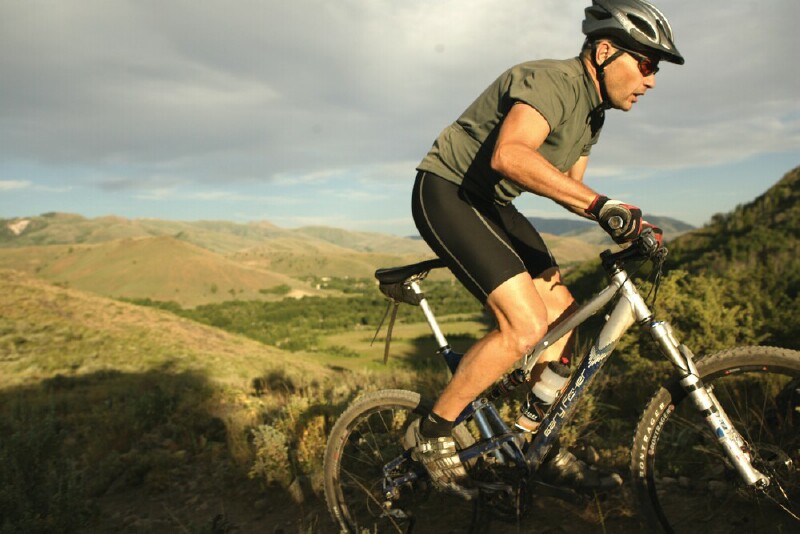
| Keith riding in Sun Valley, Utah |
Always on the forefront of technology Keith helped push the
bike industry to adopt low weight, high performance mountain bike wheels
(originally scavenged from a dumpster dive) composite forks (Keith worked with
Paul Turner on the development of the original RockShox don’t-you-know) and
developed fatigue and ultimate strength tests for bike components.
Although Bontrager ceased to be an independent company by
the mid nineties Keith doesn’t have any regrets about the decision. “ Those times weren’t that good. Work was
hard. I was broke,” says Keith.
Besides being a designer for a major bike company Keith is
also a family man, and a time mountain bike racer so as you can well imagine
Keith is busy man so I feel deeply honored that he decided to take some time
out to answer my questions. Enjoy.
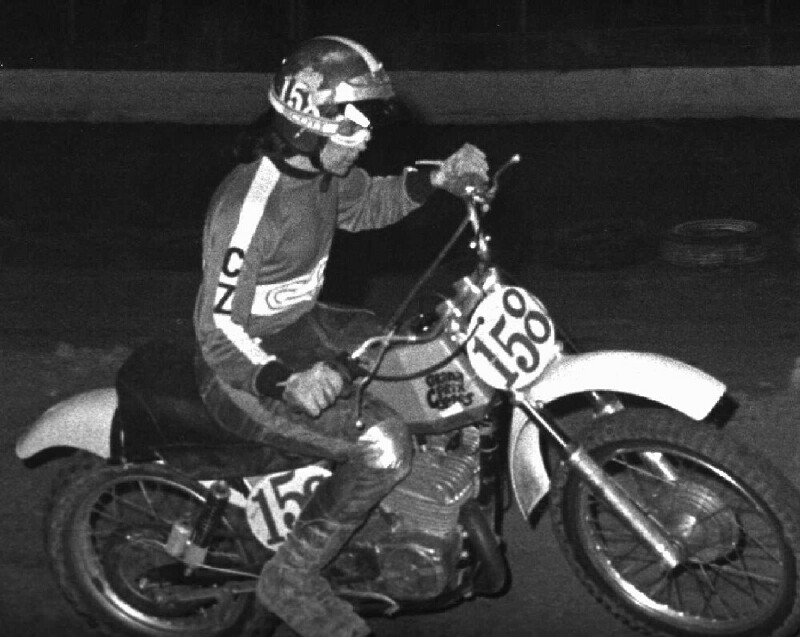 |
| Keith racing his CZ in 1975 |
I
didn’t know Ross or Steve rode motorcycles in the 70s. But a lot of people did
so that’s not a surprise.
I
raced in the same event as Mert once, at a motocross in Fremont, CA. He kicked
my ass. He was a top pro and raced the AMA flat track and National road race
circuit. That level of racing was way over my head. I raced motocross all over
the state “though and did fairly well when I didn’t fall off. I did some
enduros and some drag racing too.
Eventually
I stopped racing motorcycles and started working on them and just riding for
fun.
One
guy that you didn’t mention above is Paul Turner, the guy who started RockShox.
He was a very fast motocross racer. I worked on his brother Jim’s MX Fox/Honda
in Europe for a year. Jim was Canadian national champion.
 |
| Alloy Bontrager circa 1985 |
They are too different to compare directly. Both have
advantages and disadvantages. Each was right (and wrong) for me at the time.
That might sound evasive, but I am not trying to be. It’s a
big topic and I could fill a book with the boring details.
I’ve got to say, the “getting paid” part of working for the
big company isn’t such a bad thing. That didn’t happen sometimes during the
indy days.
Question three: The Bontrager name is
on a wide range of products at different price points, how involved are you
with both design and decision making with the Bontrager labeled products?
It depends. Bontrager is my name, but it is also a brand
now, and people can be confused by that.
Some things I am deeply involved in, others I don’t know
much about. As you said, there’s a lot going on.
Lately I have been working on wheels, both road and off
road. And saddles.
I do a lot of testing on the middle of the line stuff. It’s
important work, maybe more important in some ways than the top end stuff
because there are so many of the mid-priced parts. Also, it’s pretty easy to
find people to test ride the top end parts. Not as easy with the others.
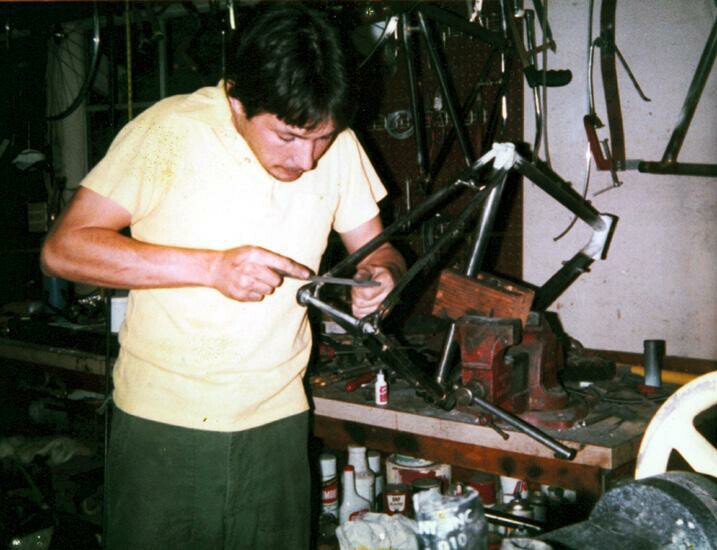 |
| Keith working in his garage |
It depends on who you are talking to but the association is
probably pretty strong with both by now I suppose.
For the record, the PM you mentioned didn’t know what he was
talking about. Here’s a quick version of
my CV – most would apply around the time we got deep into road stuff:
I am trained in physics. Rather than going deep in modern
physics, I devoted most of my university time to understanding mechanics,
dynamics and the associated mathematics. That set me up to ponder all things
bike related for over four decades, on both motorcycles and bicycles, including
the most fundamental aspects of stability, rolling wheels and aerodynamics.
Physicists do that stuff for fun, but take it seriously. You can ask the
engineers at Trek about how seriously I take it…
I’ve worked the last 20 years as a component designer, and
have spent those years studying mechanical structures and materials, including
doing a great deal of mechanical testing.
My background is not all theoretical. I spent a lot of time
tuning and wrenching on motorcycles, road and off road. And I am a frame
builder with the general metal working and machinist skills to make whatever I
want. I worked at NASA/Ames as an apprentice machinist. I’ve made motorcycle
engine and chassis parts, suspension components, and track, road, touring,
cyclocross, MTB and tandem frames.
And I have ridden and raced extensively all over the world.
I’ve also delivered newspapers on a bike, welded fence
posts, washed dishes in a restaurant, sold shoes and pumped gas.
So, if the PM had that info at hand (that is, If he actually
knew what he was talking about) he probably wouldn’t have said that, right?
I got quite a bit of press on the work I did with MTBs early
on, so people knew me from that. That’s what the PM was using as his reference
material. It wasn’t enough to know what was really happening.
There’s a deeper lesson in all that, but it escapes me at
the moment…
Sorry for the rant.
;-)
Question five: How has 3D modeling,
and hydroforming changed your design approach?
Completely in some respects. Not much at all in others.
Modern CAD is a very powerful design tool. There’s no
comparison to drawings or 2D CAD. You can make a very detailed digital
representation of a part, called a solid model, and that’s useful in several
ways. In particular you can use the solid model for stress and/or aerodynamic
analysis. This lets you predict the part’s strength or performance on the
computer, and that prediction lets you optimize it’s shape.
In many cases you can add complexity to the shape that would
be very difficult to do with older design methods. In some respects that’s why
so many components look as interesting and sophisticated as they do today.
But the best component designs still come from the
designer’s brain, not a computer. Good design is, and always will be a
combination of thoughtful, well informed engineering decisions, enough art to
make a part interesting visually and a rider’s instinct. It’s the latter that guides
the other two in many cases.
Also, I wouldn’t single out hydroforming as a particularly
critical manufacturing method. It’s popular, formed frame tubes are visually
obvious and attractive, and everyone has to do it to stay current. But it is
largely a visual element in design, and does not contribute that much to the
actual performance of bikes. In some cases it might actually detract from
performance.
There are quite a few fairly new manufacturing methods that
matter much more. New is probably not the best word – “recently improved” would
be better. 3D forging is one example.
Question six: Any thoughts on how
either carbon nanotubes or 3D printing will change bike design?
No. It’s not something I’ve put much thought into. I
generally leave wonder materials and rapid prototyping processes to the
manufacturing and materials specialists. Neither are too important to me from a
design POV.
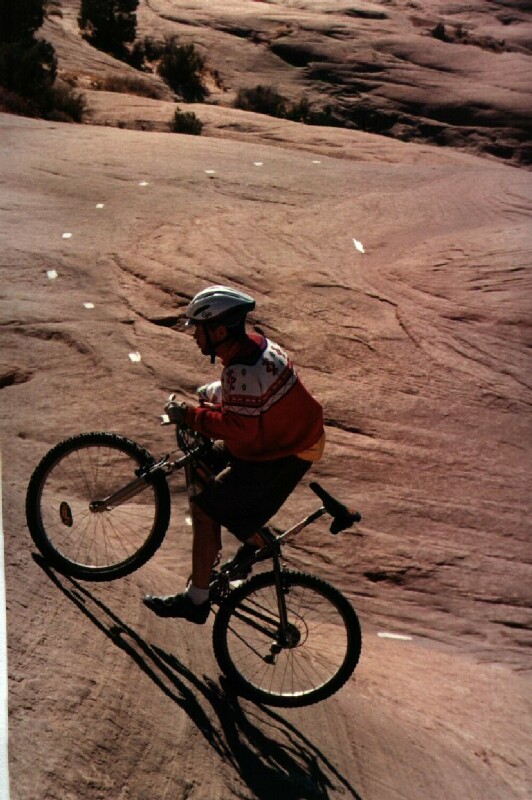 |
| Keith riding Slickrock |
You mean Pinion (or Gary did), right?
It looks like that Honda DH bike from a few years back with some
Germanic rethinking. It also looks fairly heavy and is likely to be expensive.
There is not much published on transmission efficiency either, though it could
be pretty good in that respect. Germans do (expensive) gears and bearings well. I’ll skip the predictions and see if they can
get it going.
The future of drivetrains is a “holy grail” quest among
engineers. In the end it depends on what application you are referring to. I
don’t see derailleurs going away on road or MTB bikes in the near future.
At the practical end of the cycling application spectrum
(where the Pinion makes sense) a fully enclosed single speed chain drive is
pretty hard to beat for urban use. It’s simple, efficient, durable,
inexpensive, etc. If there’s a hill use a multi speed rear hub. Belts make
sense there too. Neither is the sort of “new technology” that gets people
excited, but they are thoroughly proven and not that far from optimal.
Question eight: What do you think has
been the most exciting development in cycling during the last ten years?
Tubeless tires. I hate fixing a puncture on the road or
trail.
What has been the most
disappointing?
The trend towards electronics and battery powered gadgets. I
do not care for battery powered things. I have to live with them, but I don’t
have to like it.
;-)
Question nine: What would it take to
bring large-scale bicycle production back to the United States?
A miracle.
Or a sustained economic disaster (A Republican president in
the White House? May it never be… ;-)
I do not think there will be large scale manufacturing of
bikes here in the near future. It would cost too much to do. With a huge
investment (beyond the reach of any bike company) and some very serious
planning it could be possible to develop manufacturing along the lines of a
modern automotive plant (think Ford or GM). But that’s not going to happen.
Frankly, the Chinese are really much better at making most
things than we are. We are, as a manufacturing continent, out of practice, rusty,
and have been for decades. This is not only my view – there was a good article
about it published recently from Apple’s POV. Making things here is difficult
for a lot of reasons in addition to labor costs.
On a smaller scale things are different. There are still
quite a few people who can make very competent bikes by hand. They take a vow
of poverty to do it of course. There is no feasible way to scale that up to a
big company though.
Question ten: How can large-scale
bicycle production reduce its environmental impact?
The same ways everyone else can. Think of ways to minimize
power consumption. Minimize resource consumption. Minimize the waste stream. Do
more with less.
In the big picture view you should add the environmental
impact of making the bike to the impact of its use, and the impact of its
disposal at the end of its service life.
A low pollution, durable bike makes the sum come out pretty good.
Question eleven: You have done quite a
number of 24-hour mountain bike races, who would be on your dream team?
I’ve raced seventy or so, so yeah.
I raced on dream teams fairly often, with my friends. How
could it be any better?
Question twelve: You've been in the
public eye for quite some time now, what question are you the most tired of
being asked?
“What was it like back in the good old days?”
It was satisfying and fun to invent things. But there was no
clear path from there to making the biz sustainable.
It’s easy to be nostalgic, and I understand the reason
people are. I try not to get carried away with it though.
Question thirteen: What’s one question
you would wish someone would ask you?
What kind of beer are you going to brew next?
(Answer – a stout, for the Trek Beer competition in the
fall.)
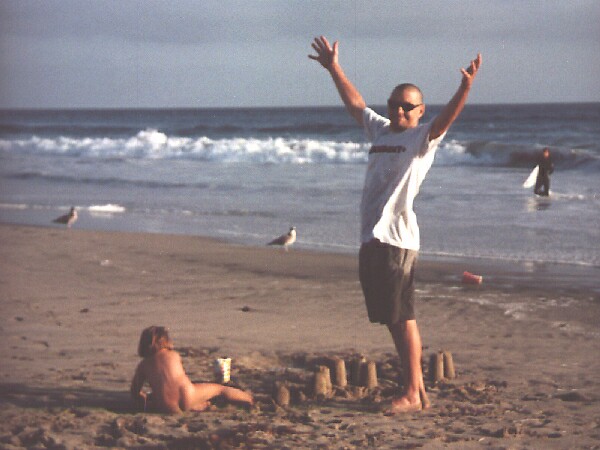 |
| Keith is happy with family at the beach |
I wanted to be a garbage collector when I was very young. I
think I liked the way they tossed the cans into the truck. Very macho. Maybe
that’s why I’ve been in so many dumpsters.
I am very lucky to be where I am today. I am
reminded of it constantly. Things would probably not have gone well otherwise.
No comments:
Post a Comment