 |
| Antonio Badass in the Land of My Childhood |
The last time I rode my local trails I was probably either on a Schwinn Stingray I found smashed on the railroad tracks or my rattle trap three speed.
Whatever it was it sure wasn’t made specifically to be ridden aggressively off road.
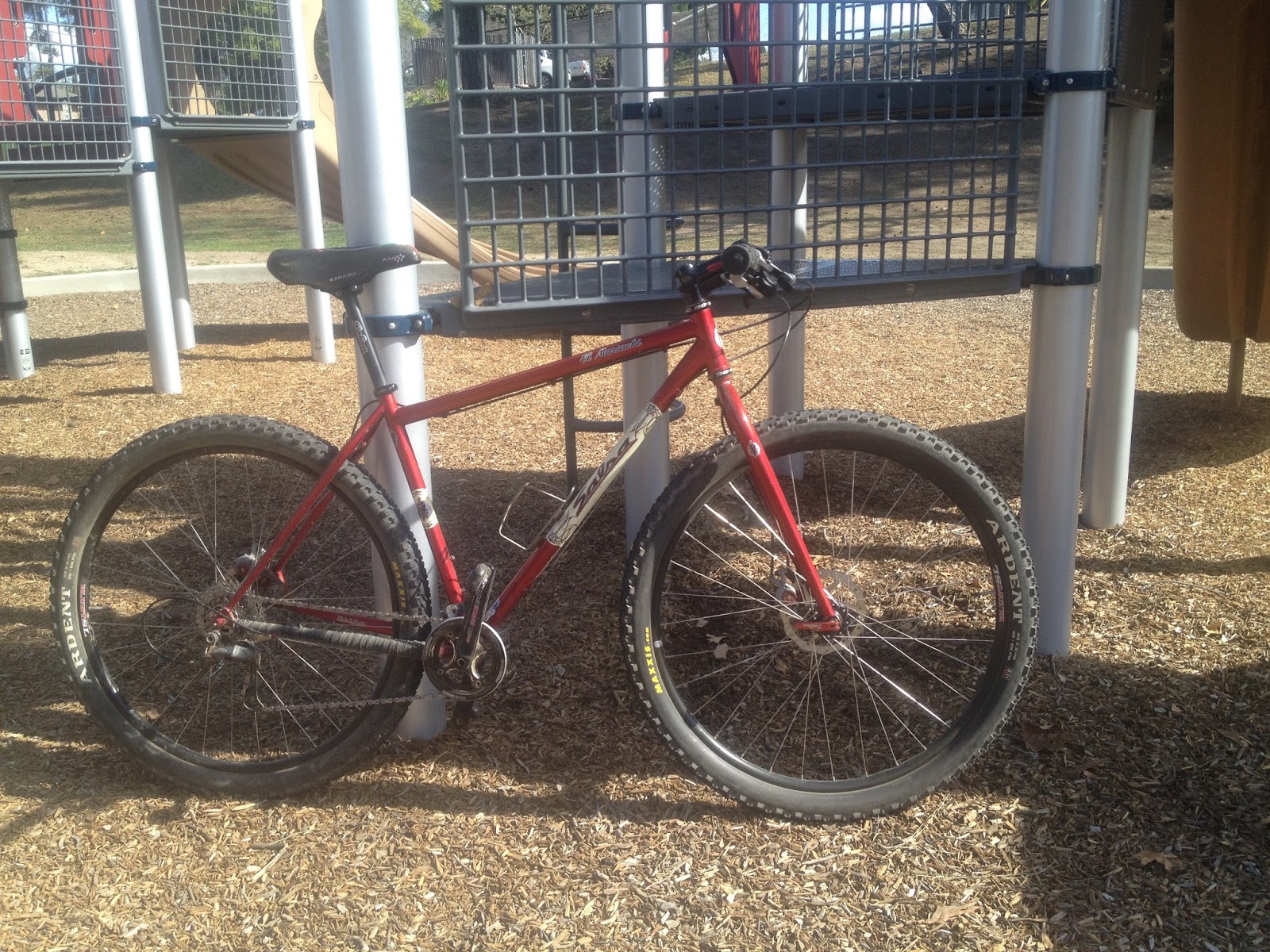
Prior to my trip I made sure I did a quick tune up on my eight-year-old 29”er so when I hit my old trails I was ready to go.
A lot had changed since the mid-eighties with bikes. Clipless pedals were first making inroads in the pro peloton, disc brakes were crude novelty items, and mountain bikes were primitive lumbering beasts.
I was excited to ride my childhood trails because that was where I developed my love for off road riding so when I hit the trails I was astonished how much difference there really was.
Rides that seemed to have taken hours were quickly devoured by modern cycling equipment. Uphills were more easily concurred due to the bike’s lower weight and extended gear range.
Downhills were less problematic now that I didn’t have to rely on a coaster brake or dragging my shoes on the ground.
Even though my bike can be considered an antique by modern standards it was light years beyond anything made in 1984.
Another major change was that my home town was now stitched together by a series of interlocking trails. Yes, some of the trails did exist back then but they had a questionable legal status so land owners and rail roads weren’t too crazy about you riding them.
I will never claim I invented something or pioneered anything because I hadn’t.
Truth be told I’m just a guy with a bike.
And a mouth.
I have neither clairvoyance or the connections to know what technical changes will be coming down the line the next thirty years.
In all honesty your guess is as good as mine but here are my guesses:
We’re going to see further technological developments that may or may not enhance the riding experience.
Wearable electronics that monitor heart rate, give us GPS updates, and items that visually record our rides will become common place.
Bikes will continue to become lighter, and stronger but that may not mean affordable or that they will be serviceable by the customer.
The original mountain bikers will start to die.
I don’t want to bum people out but thats a sad inevitability.
During my home town stay I had a long series of talks with some one that was a lot higher up in the bicycle food chain than I am. I talked to him that I was a bit dismayed by the fact that a lot of newer riders didn’t understand the history of the mountain bike but they didn’t care to know either.
He said he largely agreed with what I said but he did also question the relevance of the pioneers contributions to modern mountain biking.
It should be noted that Orville Wright died just one year after Chuck Yeager broke the sound barrier. While Orville Wright didn’t contribute anything to the design of either Miles M.52 or the Bell X-1 his work with refining the Seaton coefficient and wind tunnel designs made these crafts possible.
Do some of the early mountain bikers still contribute to modern mountain bikes?
It depends whom you are talking about and in what capacity they are involved with the design process.
We may come to point where mountain bike’s early pioneers may take on the air of an elder states person but I for one hope that mountain biking will always be seen as something somewhat disreputable, something seedy and underground.
So here’s to the fat bike downhillers, the trail poachers, the cross dressing single speeders, the freak in the garage with a torch and home made alignment table.
Here’s to the drunks, the fuck ups, the mechanics that keep shit box bikes rolling way past the time the bike should have been scrapped.
And here’s to the people who don’t care what the trends are but ride just for the fuck of it.
No comments:
Post a Comment